A blocked nose, also known as nasal congestion or a stuffy nose, is one of the most common health complaints worldwide. Whether it's caused by a cold, allergies, flu, sinus infection, or environmental irritants, a blocked nose can make everyday activities difficult.
Simple tasks such as sleeping, eating, exercising, concentrating, or even having a conversation can become uncomfortable when you cannot breathe properly through your nose.
Most cases improve within a few days, but some people experience congestion for weeks or even months. Understanding what causes a blocked nose and learning the right ways to treat it can help you recover faster and prevent future problems.
In this guide, you'll learn what causes nasal congestion, how to clear a blocked nose, effective home remedies, treatment options, common mistakes to avoid, and when to seek medical attention.
What Is a Blocked Nose?
Many people believe a blocked nose occurs because the nose is filled with mucus.
While mucus can contribute to congestion, the primary reason is often inflammation.
When the tissues and blood vessels inside the nose become swollen, airflow becomes restricted, making breathing difficult.
The body may also produce extra mucus as part of the inflammatory response, which can worsen the sensation of blockage.
Common Causes of a Blocked Nose
Several conditions can trigger nasal congestion.
Common Cold
The common cold is one of the leading causes of a blocked nose.
Viruses infect the nasal lining, causing inflammation and mucus production.
Symptoms often include:
Sneezing
Runny nose
Sore throat
Mild fever
Cough
Flu
Influenza often causes stronger symptoms than a common cold.
In addition to congestion, people may experience:
High fever
Body aches
Fatigue
Chills
Allergies
Allergic reactions can cause significant nasal swelling.
Common triggers include:
Dust mites
Pollen
Pet dander
Mold spores
Sinus Infection
Sinus infections occur when the sinus cavities become inflamed.
Symptoms may include:
Facial pressure
Thick nasal discharge
Headache
Reduced sense of smell
Chronic Rhinitis
Rhinitis refers to inflammation of the nasal lining.
It can be:
Allergic
Non-allergic
Chronic
People with chronic rhinitis may experience symptoms throughout the year.
Nasal Polyps
Nasal polyps are soft, non-cancerous growths inside the nasal passages or sinuses.
Larger polyps may partially block airflow.
Environmental Irritants
Many everyday irritants can trigger congestion:
Smoke
Vehicle exhaust
Strong perfumes
Air pollution
Dry air
Chemical fumes
Smoking
Smoking irritates the nose and respiratory system.
Long-term smoking can worsen chronic congestion and increase the risk of sinus problems.
Symptoms That Often Accompany a Blocked Nose
A blocked nose rarely appears alone.
Many people also experience:
Runny nose
Sneezing
Facial pain
Pressure around the eyes
Reduced sense of smell
Headache
Postnasal drip
Itchy nose
Dry or crusted nasal passages
How Long Does a Blocked Nose Last?
The duration depends on the underlying cause.
Cause | Typical Duration |
|---|---|
Common Cold | 7–10 Days |
Flu | 1–2 Weeks |
Allergies | As Long as Exposure Continues |
Sinus Infection | Several Days to Weeks |
Chronic Rhinitis | Months or Longer |
Nasal Polyps | Persistent Until Treated |
If symptoms continue beyond several weeks, medical evaluation may be necessary.
How to Clear a Blocked Nose Naturally
Many cases improve with simple home remedies.
1. Stay Hydrated
Drinking plenty of fluids helps thin mucus.
Thin mucus drains more easily than thick mucus.
Best Choices
Water
Warm herbal tea
Clear soups
Warm broth
Real-World Example
Someone with a cold may notice congestion improving after drinking warm fluids throughout the day.
2. Inhale Steam
Steam inhalation is one of the most popular congestion remedies.
Warm steam adds moisture to the nasal passages.
How to Use Steam Safely
Fill a bowl with hot water.
Sit comfortably.
Lean over the bowl.
Cover your head with a towel.
Breathe deeply for several minutes.
Safety Tip
Avoid placing your face too close to hot water to prevent burns.
Benefits
Moisturizes nasal passages
Loosens mucus
Improves comfort
3. Use a Saline Nasal Spray
Saline sprays contain saltwater that helps moisturize the nasal passages.
Benefits
Non-medicated
Safe for many people
Helps remove irritants
Loosens mucus
Example
People with dry indoor air often experience immediate comfort after using saline sprays.
4. Take a Warm Shower
A warm shower provides continuous steam.
Many people find breathing easier afterward.
Why It Works
Warm moist air helps reduce irritation and loosen secretions.
5. Apply a Warm Compress
Place a warm towel across:
Nose
Cheeks
Forehead
This may help reduce sinus pressure and improve comfort.
How to Sleep with a Blocked Nose
Nighttime congestion can be particularly frustrating.
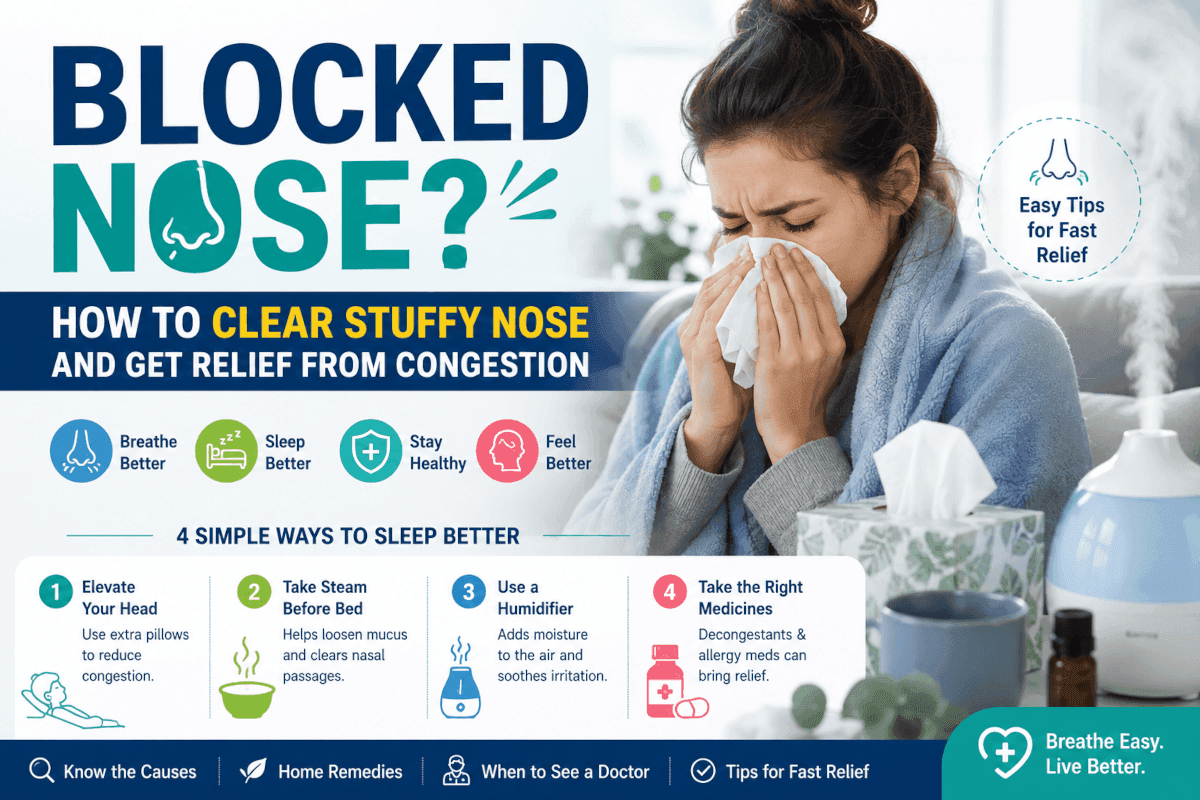
1. Elevate Your Head
Sleeping flat can worsen congestion.
How to Do It
Use an extra pillow or an adjustable bed position.
Why It Helps
Elevation encourages mucus drainage and reduces sinus pressure.
Real-World Example
Many people report less nighttime congestion after raising their head slightly.
2. Take Steam Before Bed
Steam inhalation before sleeping can improve airflow and comfort.
Benefits
Helps loosen mucus
Reduces dryness
Makes breathing easier
3. Use a Humidifier
Dry air can irritate nasal tissues.
Humidifiers add moisture to indoor air.
Benefits
Reduces dryness
Improves comfort
Supports easier breathing
Important Tip
Clean humidifiers regularly to prevent mold growth.
4. Take Appropriate Medication
Certain medications may help relieve congestion.
Examples include:
Decongestants
Antihistamines
Allergy medications
Always follow instructions and consult a healthcare professional if unsure.
Comparing Popular Congestion Relief Methods
Method | Speed of Relief | Cost | Ease of Use |
|---|---|---|---|
Steam Inhalation | Moderate | Low | Easy |
Saline Spray | Fast | Low | Very Easy |
Humidifier | Moderate | Medium | Easy |
Warm Shower | Moderate | Low | Easy |
Decongestant Medication | Fast | Low-Medium | Easy |
Hydration | Gradual | Very Low | Very Easy |
When Should You See a Doctor?
Most cases improve without medical treatment.
However, you should seek medical advice if you experience:
Fever
Persistent or high fever may indicate infection.
Difficulty Breathing
Breathing problems require prompt medical attention.
Green or Yellow Discharge with Severe Pain
This may suggest a bacterial sinus infection.
Blood in Nasal Discharge
Blood-stained mucus should be evaluated by a healthcare professional.
Symptoms Lasting Several Weeks
Persistent congestion may indicate:
Chronic sinusitis
Allergies
Nasal polyps
Structural nasal issues
High-Risk Groups That Should Seek Medical Advice Earlier
Certain individuals should not delay medical evaluation:
Infants
Older adults
People with weakened immune systems
Individuals with chronic respiratory conditions
Common Mistakes People Make
Using Nasal Decongestant Sprays Too Long
Overuse can cause rebound congestion.
Many decongestant sprays should not be used for more than a few days without medical guidance.
Not Drinking Enough Water
Dehydration can make mucus thicker and harder to clear.
Ignoring Allergy Triggers
Failing to address the underlying cause often leads to recurring symptoms.
Sleeping Flat
Lying completely flat may worsen nighttime congestion.
Smoking During Illness
Smoking further irritates inflamed tissues and delays recovery.
Pros and Cons of Common Blocked Nose Remedies
Remedy | Pros | Cons |
|---|---|---|
Steam Inhalation | Inexpensive and effective | Burn risk if used improperly |
Saline Spray | Safe and easy | Temporary relief |
Humidifier | Helpful in dry climates | Requires cleaning |
Warm Shower | Convenient | Relief may be temporary |
Medication | Fast relief | Possible side effects |
Hydration | Supports recovery | Slower results |
Frequently Asked Questions
Why is my nose blocked but not running?
This often occurs because swollen nasal tissues are restricting airflow rather than excessive mucus production.
Can allergies cause year-round congestion?
Yes. Dust mites, pet dander, and indoor allergens can cause chronic symptoms.
How can I unblock my nose quickly?
Steam inhalation, saline sprays, warm showers, and proper hydration may provide relatively quick relief.
Why does my nose get more blocked at night?
Lying down changes blood flow and mucus drainage, which can worsen congestion.
Can dehydration worsen a blocked nose?
Yes. Dehydration may thicken mucus and make congestion feel worse.
Is a blocked nose always caused by a cold?
No. Allergies, sinus infections, nasal polyps, irritants, and chronic conditions can also cause congestion.
How long should a blocked nose last?
Most cold-related congestion improves within 7 to 10 days.
When should I worry about nasal congestion?
Seek medical advice if symptoms persist, worsen, or are accompanied by fever, breathing difficulty, severe pain, or bloody discharge.
Final Thoughts
A blocked nose is usually a temporary problem, but it can significantly affect comfort, sleep quality, productivity, and overall well-being. While most cases are caused by colds, allergies, or minor infections, persistent congestion should never be ignored.
Simple measures such as staying hydrated, using steam, elevating your head while sleeping, and managing allergies can often provide substantial relief. Understanding the underlying cause is the key to choosing the most effective treatment.
If your symptoms continue for several weeks, become severe, or interfere with daily life, consult a healthcare professional to identify the cause and receive appropriate treatment. A clear nose not only makes breathing easier but also improves sleep, energy levels, and overall quality of life.