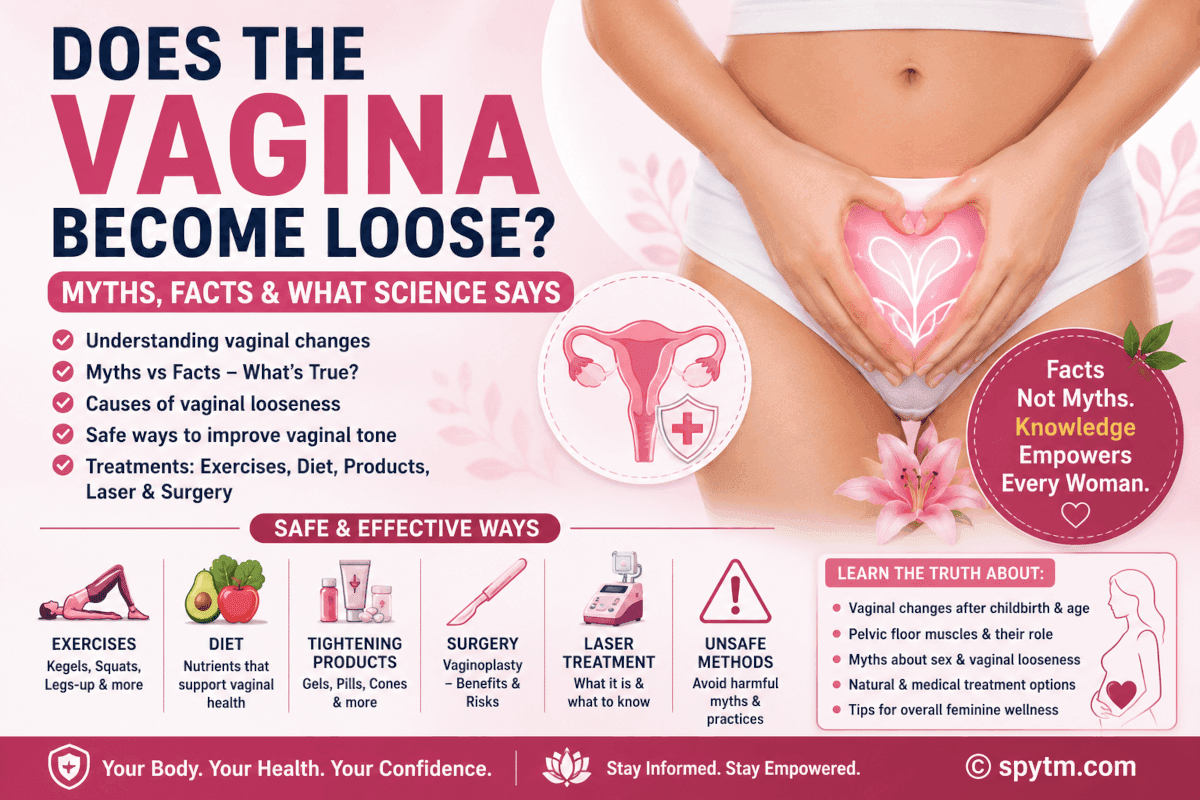
Many women worry about whether their vagina has become "loose" over time. This concern often arises after childbirth, with aging, or because of information seen online and on social media.
You may have heard claims that having frequent sexual intercourse can permanently stretch the vagina or that certain home remedies can magically make it tighter. These beliefs are widespread, but most of them are not supported by medical science.
The truth is that the vagina is an incredibly flexible and elastic organ. It is designed to stretch significantly during childbirth and then gradually return close to its original state. However, factors such as age, hormonal changes, childbirth, and pelvic floor muscle weakness can affect how vaginal tone feels.
Understanding the facts can help women make informed decisions about their health and avoid unsafe practices promoted online.
In this guide, we'll explore what science says about vaginal looseness, common myths, effective treatment options, and what women can realistically do to improve pelvic floor strength and vaginal health.
Understanding the Difference Between the Vagina and Vulva
Before discussing vaginal tightness, it is important to understand the difference between two terms that are often confused.
What Is the Vagina?
The vagina is the internal muscular canal that connects the cervix to the outside of the body.
It is involved in:
Menstruation
Sexual intercourse
Childbirth
What Is the Vulva?
The vulva refers to the external female genital structures, including:
Labia majora
Labia minora
Clitoris
Vaginal opening
Many articles incorrectly use the word "vulva" when discussing vaginal tightness. In reality, concerns about "tightness" usually involve the vagina and pelvic floor muscles rather than the vulva.
Does the Vagina Actually Become Loose?
The short answer is: sometimes, but not for the reasons many people believe.
The vagina is highly elastic.
Like a rubber band, it can stretch and then return toward its original shape.
However, certain factors may affect vaginal tone and pelvic floor strength over time.
Childbirth
Vaginal delivery is one of the most common reasons women notice changes.
During childbirth:
Vaginal tissues stretch significantly.
Pelvic floor muscles undergo stress.
Recovery may take weeks or months.
Most women regain much of their vaginal tone naturally.
Aging
As women age:
Estrogen levels decrease.
Muscle strength may decline.
Connective tissues become less elastic.
These changes can affect how the vagina feels.
Pelvic Floor Weakness
The pelvic floor muscles support:
The bladder
The uterus
The rectum
Weak pelvic muscles can create a feeling of looseness.
Menopause
Hormonal changes during menopause may cause:
Reduced elasticity
Vaginal dryness
Thinner vaginal tissues
Common Myths About Vaginal Looseness
Myth 1: Frequent Sex Makes the Vagina Loose
Fact
This is one of the most common myths.
Sexual intercourse does not permanently stretch the vagina.
The vagina naturally expands during arousal and returns to its usual state afterward.
The number of sexual partners also has no effect on vaginal tightness.
Myth 2: A Tight Vagina Means Better Sexual Pleasure
Fact
Sexual satisfaction depends on many factors:
Emotional connection
Comfort
Communication
Arousal
Overall health
Excessive tightness can actually make intercourse painful.
Myth 3: Home Remedies Can Instantly Tighten the Vagina
Fact
No cream, herb, toothpaste, or homemade remedy can permanently tighten the vagina.
Many products marketed online lack scientific evidence.
Myth 4: Childbirth Permanently Ruins the Vagina
Fact
The body has remarkable healing abilities.
Most women recover significantly after childbirth.
Some women may benefit from pelvic floor rehabilitation if symptoms persist.
Signs That May Indicate Pelvic Floor Weakness
Women may experience:
Feeling of vaginal looseness
Urinary leakage
Difficulty controlling urine during coughing or sneezing
Pelvic pressure
Reduced pelvic support
If these symptoms interfere with daily life, medical advice should be sought.
Natural Ways to Improve Pelvic Floor Strength
Exercise
Regular exercise helps improve overall muscle strength and pelvic health.
Kegel Exercises
Kegel exercises are among the most commonly recommended methods.
How Kegels Work
They strengthen the pelvic floor muscles that support the vagina, bladder, and uterus.
How to Perform Kegels
Identify the muscles used to stop urine flow.
Contract those muscles.
Hold for 3–5 seconds.
Relax.
Repeat 10–15 times.
Benefits
Improved pelvic support
Better bladder control
Increased muscle strength
Squats
Squats engage:
Glutes
Core muscles
Pelvic floor muscles
Benefits
Improves lower body strength
Supports pelvic stability
Leg Raise Exercises
Leg raises help strengthen:
Core muscles
Hip muscles
Lower abdominal muscles
These muscles indirectly support pelvic health.
Diet and Vaginal Health
A healthy diet cannot directly tighten the vagina, but it supports overall tissue health.
Foods That Support Women's Health
Sweet Potatoes
Rich in:
Vitamin A
Fiber
Antioxidants
Soy Products
Contain phytoestrogens that may support hormonal balance.
Avocados
Provide:
Healthy fats
Potassium
Vitamin B6
Leafy Green Vegetables
Supply:
Calcium
Magnesium
Vitamin E
Importance of Hydration
Proper hydration supports:
Tissue health
Lubrication
Overall well-being
Comparing Vaginal Tightening Methods
Method | Scientific Support | Cost | Risks |
|---|---|---|---|
Kegel Exercises | High | Low | Very Low |
Pelvic Floor Therapy | High | Moderate | Very Low |
Lifestyle Changes | Moderate | Low | Very Low |
Vaginal Cones | Moderate | Moderate | Low |
Laser Treatments | Limited | High | Moderate |
Surgery (Vaginoplasty) | Variable | Very High | High |
Vaginal Tightening Products: Do They Work?
Many products claim to tighten the vagina:
Gels
Pills
Creams
Cones
Tampons
What Science Says
Evidence supporting many commercial products is limited.
Some products may temporarily create a tightening sensation but do not permanently change vaginal structure.
Potential Risks
Allergic Reactions
Some women experience:
Irritation
Burning
Redness
Infection Risk
Improper use can disrupt natural vaginal balance.
Always consult a healthcare professional before using intimate health products.
Vaginal Tightening Surgery (Vaginoplasty)
Vaginoplasty is a surgical procedure designed to alter vaginal structure.
Potential Benefits
Structural correction in selected cases
Improvement in some symptoms
Possible Risks
Pain
Pain may occur during recovery.
Scarring
Any surgery carries a risk of scarring.
Infection
Though uncommon, infection remains a possibility.
Unsatisfactory Results
Not every patient experiences the desired outcome.
Laser Vaginal Tightening
Laser-based treatments are marketed as vaginal rejuvenation procedures.
Claimed Benefits
Tissue remodeling
Improved vaginal tone
Limitations
Research remains limited.
Results may vary significantly between individuals.
Potential Risks
Discomfort
Some women report pain or sensitivity.
Temporary Results
Benefits may diminish over time.
Cost
Laser treatments are often expensive.
Unsafe Methods Women Should Avoid
Aloe Vera Applications
There is no evidence that aloe vera tightens the vagina.
Improper use may cause irritation.
Douching
Douching can disrupt the natural vaginal environment.
Risks
Infection
Irritation
Increased risk of bacterial imbalance
Toothpaste
Applying toothpaste to genital tissues is unsafe.
Possible Problems
Chemical burns
Irritation
Allergic reactions
Menthol Balms
Menthol products are designed for external skin use.
They should never be applied internally.
Vaginal Steaming
Scientific evidence does not support vaginal steaming for tightening.
Potential Risks
Burns
Irritation
Infection
Real-World Examples
Example 1: New Mother
A woman notices changes after childbirth.
After several months of pelvic floor exercises and recovery, she regains confidence and improved muscle strength.
Example 2: Menopausal Woman
A woman experiences vaginal dryness and reduced elasticity.
Medical consultation helps identify hormonal changes contributing to her symptoms.
Example 3: Social Media Influence
A woman purchases a "miracle tightening cream" online.
The product causes irritation but no measurable improvement.
This highlights the importance of relying on evidence-based treatments.
Common Mistakes Women Make
Believing Internet Myths
Not all online health advice is accurate.
Using Unsafe Home Remedies
Toothpaste, douching, and other viral remedies can be harmful.
Expecting Instant Results
Pelvic floor strengthening takes time and consistency.
Ignoring Professional Help
Persistent symptoms should be evaluated by a healthcare provider.
Pros and Cons of Popular Tightening Approaches
Method | Pros | Cons |
|---|---|---|
Kegel Exercises | Safe, inexpensive, effective | Requires consistency |
Healthy Lifestyle | Improves overall health | Gradual results |
Pelvic Therapy | Professional guidance | May cost money |
Laser Treatment | Non-surgical | Expensive, limited evidence |
Surgery | Can address structural issues | Higher risks and cost |
Frequently Asked Questions
Does sex make the vagina loose?
No. Sexual intercourse does not permanently loosen the vagina.
Can Kegel exercises tighten the vagina?
Kegels strengthen pelvic floor muscles and may improve support and muscle tone.
Does childbirth permanently stretch the vagina?
Not usually. Most women experience significant recovery after childbirth.
Are vaginal tightening creams effective?
Scientific evidence supporting most products is limited.
Is laser vaginal tightening safe?
Some procedures are available, but evidence regarding long-term benefits remains limited.
Can menopause affect vaginal tightness?
Yes. Hormonal changes may affect elasticity and tissue health.
Is vaginoplasty necessary for most women?
No. Most women do not require surgery and can benefit from non-surgical approaches.
What is the safest way to improve vaginal tone?
Pelvic floor exercises and professional pelvic floor therapy are generally considered the safest options.
Final Thoughts
The idea that a woman becomes "loose" because of sexual activity is a myth that has persisted for generations. Science shows that the vagina is a highly elastic organ designed to stretch and recover naturally. While childbirth, aging, and pelvic floor weakness can affect vaginal tone, there are safe and effective ways to support pelvic health.
For most women, regular pelvic floor exercises, healthy lifestyle habits, and proper medical guidance provide the best long-term results. Most importantly, avoid unsafe remedies and marketing claims that promise instant tightening. Understanding the facts can help women make confident, informed decisions about their health and well-being.