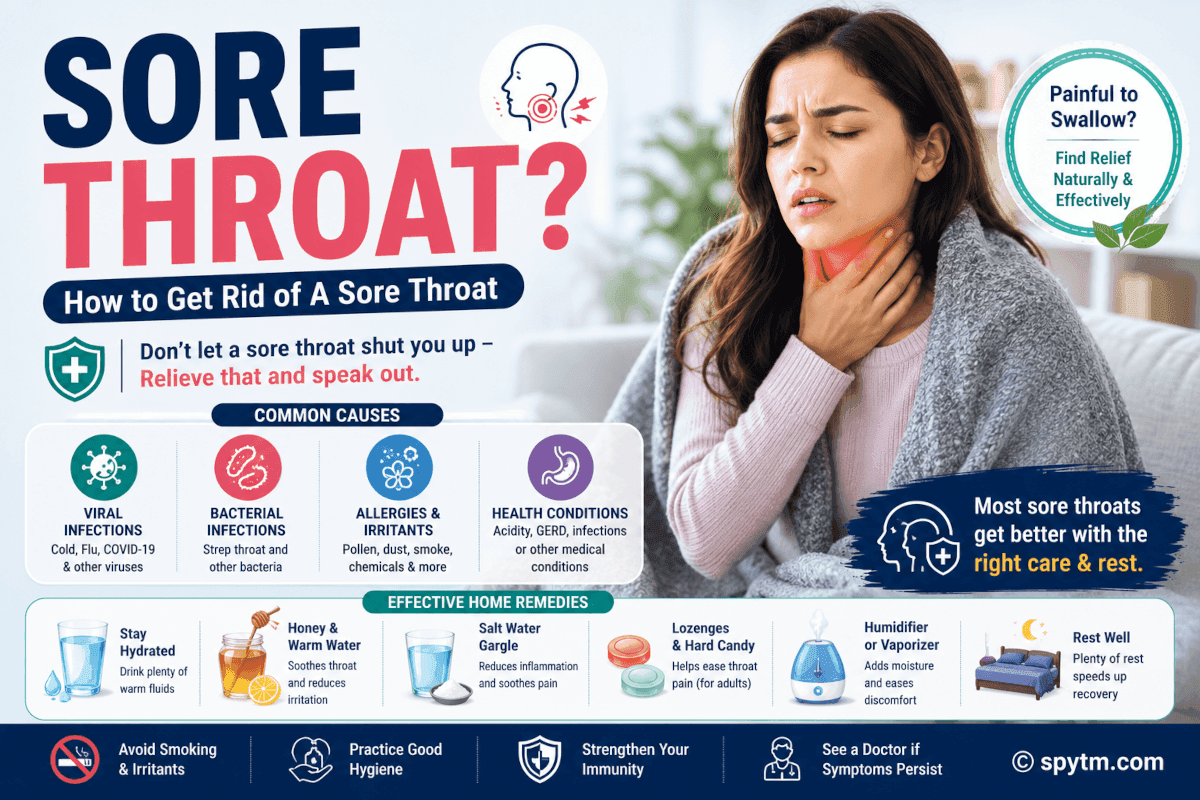
A sore throat is one of the most common health complaints affecting people of all ages. It can make swallowing painful, cause irritation while talking, and even interfere with eating, sleeping, and daily activities.
Most sore throats are caused by viral infections such as the common cold or flu and improve within a few days. However, some cases may be linked to bacterial infections, allergies, acid reflux, or other medical conditions that require treatment.
The good news is that most sore throats can be managed effectively with simple home remedies, adequate hydration, and proper rest.
In this comprehensive guide, you'll learn what causes sore throats, how to identify different symptoms, the difference between viral and bacterial infections, effective home remedies, treatment options, and when you should seek medical help.
What Is a Sore Throat?
A sore throat, medically known as Pharyngitis, refers to pain, irritation, or scratchiness in the throat.
The discomfort often becomes worse when:
Swallowing food
Drinking liquids
Talking
Breathing through the mouth
The severity can range from mild irritation to intense pain.
Common Symptoms of a Sore Throat
People may experience:
Throat pain
Scratchy sensation
Difficulty swallowing
Dry throat
Swollen glands
Hoarse voice
Redness inside the throat
Fever
Cough
Runny nose
Symptoms often depend on the underlying cause.
Main Causes of a Sore Throat
1. Viral Infections
Viruses are responsible for most sore throat cases.
Health experts estimate that approximately 85% to 95% of adult sore throats are caused by viral infections.
Common viral illnesses include:
Common cold
Influenza (flu)
COVID-19
Measles
Chickenpox
Mononucleosis
Why Viruses Cause Sore Throats
When viruses infect the respiratory tract, they trigger inflammation in the throat tissues.
This inflammation causes:
Pain
Swelling
Irritation
Real-World Example
A person develops a runny nose, mild fever, sneezing, and throat irritation after being exposed to someone with a cold. This is a typical viral sore throat.
2. Bacterial Infections
Although less common, bacteria can also cause sore throats.
The most common bacterial cause is:
Strep Throat
Strep throat occurs when Group A Streptococcus bacteria infect the throat and tonsils.
Unlike viral infections, bacterial infections may require medical treatment.
Symptoms Often Include
Sudden severe throat pain
Fever
Swollen tonsils
White patches on tonsils
Painful swallowing
3. Allergies
Allergies can irritate the throat.
Common triggers include:
Pollen
Dust mites
Pet dander
Mold
Why Allergies Cause Sore Throats
Postnasal drip caused by allergies allows mucus to flow down the back of the throat, leading to irritation.
4. Environmental Irritants
Several environmental factors can irritate throat tissues.
Examples include:
Tobacco smoke
Air pollution
Chemical fumes
Dry air
Strong perfumes
Smoking and Sore Throat
Smoking is a major cause of chronic throat irritation.
The chemicals in tobacco damage throat tissues and increase inflammation.
5. Acid Reflux (GERD)
Gastroesophageal Reflux Disease (GERD) occurs when stomach acid travels back into the esophagus and throat.
Common Symptoms
Burning sensation
Sore throat
Bitter taste
Hoarseness
Many people do not realize their recurring sore throat may be caused by acid reflux.
6. Other Medical Conditions
In rare cases, sore throat may be associated with:
HIV infection
Immune disorders
Tumors
Chronic infections
Persistent symptoms should always be evaluated by a healthcare professional.
Viral vs Bacterial Sore Throat
Many people wonder whether their sore throat is caused by a virus or bacteria.
The symptoms often overlap, making professional evaluation important.
Comparison Table
Feature | Viral Sore Throat | Bacterial Sore Throat |
|---|---|---|
Onset | Gradual | Sudden |
Fever | Mild or none | Often high |
Cough | Common | Usually absent |
Runny Nose | Common | Rare |
Hoarseness | Common | Rare |
White Tonsil Patches | Less common | Common |
Swollen Lymph Nodes | Possible | Common |
Duration | 5–7 Days | Can worsen without treatment |
Symptoms of Viral Sore Throat
Viral sore throats are often accompanied by:
Runny nose
Sneezing
Cough
Mild fever
Hoarseness
Pink eye (conjunctivitis)
Example
Someone with a cold may experience:
Runny nose
Sneezing
Mild sore throat
Cough
These symptoms strongly suggest a viral infection.
Symptoms of Bacterial Sore Throat
Bacterial infections often produce:
Sudden throat pain
Fever
Enlarged tonsils
White pus patches
Swollen neck glands
Painful swallowing
Example
A child develops severe throat pain overnight with fever and swollen tonsils. This may indicate strep throat.
Home Remedies for a Sore Throat
Most sore throats improve with supportive care.
1. Stay Hydrated
Hydration is one of the most effective remedies.
Why It Helps
Fluids keep the throat moist and reduce irritation.
Best Options
Warm water
Herbal tea
Clear soups
Warm broth
Real-World Example
Many people experience immediate comfort after drinking warm tea with honey.
2. Honey and Warm Water
Honey has soothing properties.
How to Use
Mix:
One spoon of honey
Warm water
Optional lemon juice
Benefits
Coats the throat
Reduces irritation
Improves comfort
Note: Honey should not be given to infants under one year of age.
3. Salt Water Gargles
Saltwater gargling is a traditional remedy supported by medical experts.
How to Prepare
Mix:
¼ teaspoon salt
One cup warm water
How It Helps
Reduces swelling
Removes irritants
Relieves discomfort
Step-by-Step
Take a sip.
Gargle for several seconds.
Spit out.
Repeat several times.
4. Use Lozenges
Adults often find relief from:
Throat lozenges
Hard candies
Benefits
These stimulate saliva production and keep the throat moist.
Important Safety Note
Avoid giving lozenges to young children because of choking risks.
5. Use a Humidifier
Dry air can worsen throat irritation.
Humidifiers add moisture to indoor air.
Benefits
Prevents dryness
Improves breathing
Supports healing
Example
Many people notice worse symptoms during winter when indoor air becomes dry.
6. Get Plenty of Rest
The body heals faster when properly rested.
Why Rest Matters
Sleep helps:
Strengthen immunity
Reduce inflammation
Speed recovery
7. Avoid Smoking
Smoking irritates already inflamed throat tissues.
Benefits of Avoiding Smoking
Faster recovery
Reduced irritation
Better respiratory health
Medical Treatment Options
Treatment depends on the cause.
Viral Infections
Most viral sore throats improve without antibiotics.
Treatment usually focuses on symptom relief.
Bacterial Infections
Doctors may prescribe antibiotics if a bacterial infection such as strep throat is confirmed.
Important Reminder
Antibiotics do not work against viruses.
Pain Relief Medications
Healthcare providers may recommend appropriate medications to help manage discomfort and fever.
Always follow medical advice and label instructions.
Common Mistakes People Make
Taking Antibiotics Without Confirmation
Not all sore throats require antibiotics.
Misuse contributes to antibiotic resistance.
Ignoring Hydration
Dehydration often worsens symptoms.
Continuing to Smoke
Smoking delays healing and increases irritation.
Not Getting Enough Rest
Recovery often takes longer without adequate sleep.
Delaying Medical Attention
Severe symptoms should never be ignored.
Pros and Cons of Common Sore Throat Remedies
Remedy | Pros | Cons |
|---|---|---|
Warm Fluids | Easy and inexpensive | Temporary relief |
Honey | Soothing and natural | Not suitable for infants |
Saltwater Gargle | Effective and low cost | Requires regular use |
Lozenges | Convenient | Choking risk for children |
Humidifier | Helps dry air irritation | Requires cleaning |
Rest | Supports recovery | Results take time |
When Should You See a Doctor?
Seek medical attention if you experience:
High Fever
Persistent fever may indicate infection.
Difficulty Breathing
Breathing problems require urgent evaluation.
Severe Difficulty Swallowing
This may indicate a serious condition.
Symptoms Last Longer Than Expected
Persistent symptoms should be investigated.
White Patches on Tonsils
This may indicate strep throat or another infection.
Recurring Sore Throats
Repeated episodes may require further evaluation.
Frequently Asked Questions
How long does a sore throat usually last?
Most viral sore throats improve within 5 to 7 days.
Can allergies cause a sore throat?
Yes. Postnasal drip from allergies often irritates the throat.
Does honey help a sore throat?
Yes. Honey may provide temporary soothing relief.
Do I need antibiotics for every sore throat?
No. Most sore throats are caused by viruses and do not require antibiotics.
Can acid reflux cause throat pain?
Yes. GERD can cause chronic throat irritation and soreness.
Should I exercise with a sore throat?
Light activity may be acceptable if symptoms are mild, but adequate rest is generally recommended.
Is COVID-19 associated with sore throat?
Yes. Sore throat can be a symptom of COVID-19.
Can dehydration make a sore throat worse?
Yes. Dry tissues often become more irritated and painful.
Final Thoughts
A sore throat is usually a temporary symptom caused by viral infections, allergies, irritants, or other common conditions. Although uncomfortable, most cases improve within a few days with proper hydration, rest, and simple home remedies.
Understanding the cause of your sore throat is important because treatment approaches differ for viral infections, bacterial infections, allergies, and acid reflux. Paying attention to associated symptoms can help identify when professional medical evaluation is necessary.
By staying hydrated, avoiding irritants, getting enough rest, and seeking medical advice when symptoms become severe or persistent, you can recover more quickly and reduce the risk of complications.