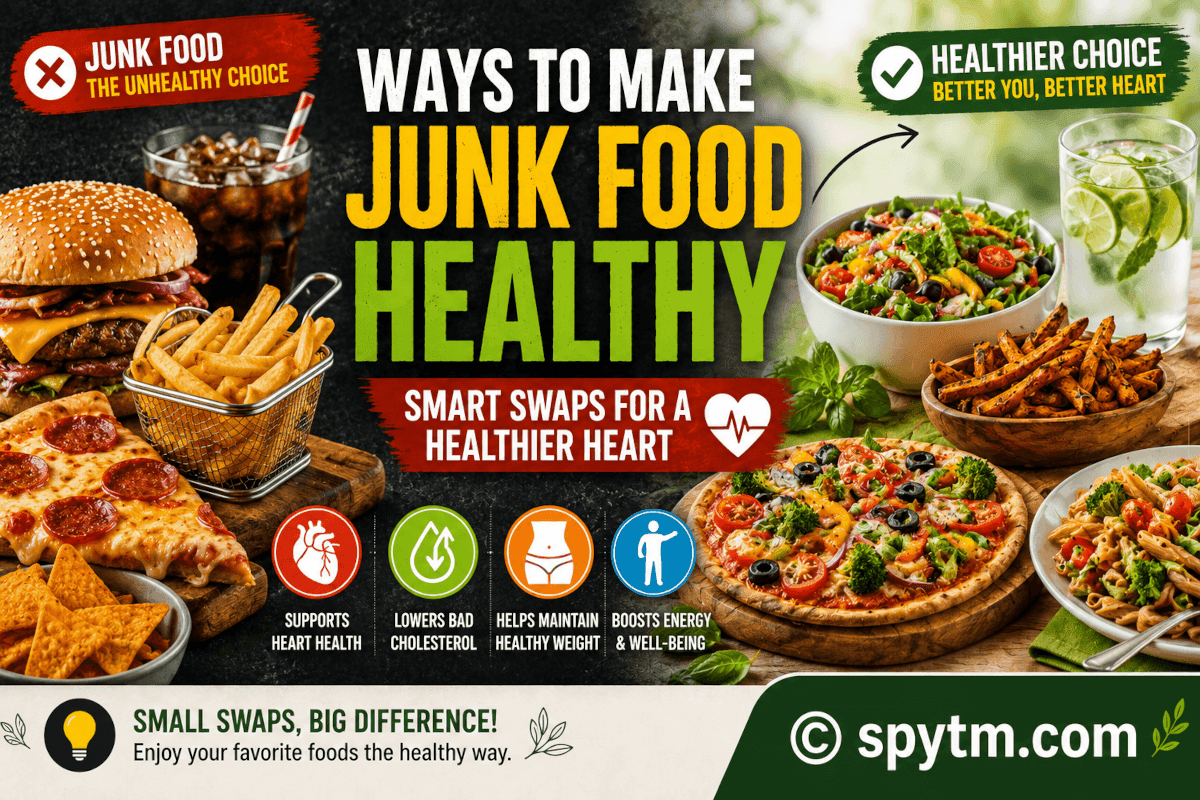
We all love junk food. Whether it's crispy French fries, cheesy pizza, burgers, soft drinks, or creamy pasta, these foods are often delicious and convenient. However, eating too much junk food regularly can negatively affect your health, especially your heart.
The good news is that you don't always have to completely give up your favorite foods. By making a few smart changes, you can enjoy many popular foods while reducing their impact on your health.
In this guide, you'll learn how to make junk food healthier through simple food swaps, healthier cooking methods, and better ingredient choices. These tips can help support heart health, improve cholesterol levels, maintain a healthy weight, and boost overall well-being.
What Is Junk Food?
Junk food refers to foods that are high in:
Calories
Saturated fats
Trans fats
Added sugar
Salt (sodium)
But are often low in:
Fiber
Vitamins
Minerals
Protein
Common examples include:
French fries
Pizza
Burgers
Sugary soft drinks
Chips
Processed snacks
Fast food meals
Eating these foods occasionally is generally fine, but frequent consumption may increase the risk of obesity, diabetes, high blood pressure, and heart disease.
Why Heart Health Matters
Your heart works 24 hours a day to pump blood throughout your body.
Poor dietary habits can lead to:
High cholesterol
High blood pressure
Weight gain
Blocked arteries
Increased risk of heart attack and stroke
Making healthier food choices can help protect your heart for years to come.
What Is Cholesterol?
Cholesterol is a waxy substance found in your blood.
Your body needs cholesterol to:
Build healthy cells
Produce hormones
Make vitamin D
Support digestion
However, too much cholesterol can be harmful.
Types of Cholesterol
LDL Cholesterol (Bad Cholesterol)
High levels can lead to plaque buildup in arteries.
HDL Cholesterol (Good Cholesterol)
Helps remove excess cholesterol from the bloodstream.
How Junk Food Affects Cholesterol
Many junk foods contain:
Trans fats
Saturated fats
Excess sugar
These ingredients can increase LDL cholesterol and negatively affect heart health.
1. Make French Fries Healthier
French fries are one of the world's favorite snacks.
Unfortunately, traditional fries are usually:
Deep-fried
High in calories
High in sodium
High in unhealthy fats
Healthier Alternative: Baked or Air-Fried Fries
Instead of deep-frying:
Option 1: Oven-Baked Fries
Slice potatoes, season lightly, and bake until crispy.
Option 2: Air Fryer Fries
Air fryers use significantly less oil while still producing a crispy texture.
Comparison
Method | Calories | Oil Usage | Heart Friendly |
|---|---|---|---|
Deep Fried | High | High | No |
Oven Baked | Moderate | Low | Yes |
Air Fried | Lower | Very Low | Yes |
Real-World Example
A family that switches from deep-fried fries twice weekly to air-fried potatoes can significantly reduce overall oil consumption throughout the year.
2. Make Pizza and Pasta Healthier
Pizza and pasta are comfort foods enjoyed worldwide.
However, restaurant versions are often loaded with:
Cheese
Processed meats
Refined flour
Excess sodium
Smart Pizza Upgrades
Use Whole Wheat Crust
Whole grains provide:
More fiber
Better digestion
Improved fullness
Add More Vegetables
Great options include:
Bell peppers
Tomatoes
Mushrooms
Onions
Spinach
Olives
Reduce Cheese Quantity
You can still enjoy cheese while using smaller amounts.
Healthier Pasta Tips
Choose:
Whole wheat pasta
Vegetable-based sauces
Lean proteins
Instead of:
Heavy cream sauces
Excess cheese
Comparison
Traditional Pizza | Healthier Pizza |
|---|---|
White flour crust | Whole wheat crust |
Extra cheese | Moderate cheese |
Processed meat toppings | Vegetable toppings |
High sodium | Lower sodium |
3. Make Egg-Based Meals Healthier
Eggs are among the most nutritious foods available.
Are Egg Yolks Bad?
For most healthy individuals, moderate egg consumption is not harmful.
Egg yolks contain:
Vitamin A
Vitamin D
Vitamin B12
Choline
Healthier Egg Preparation
Add Vegetables
Mix eggs with:
Spinach
Tomatoes
Onions
Bell peppers
Choose Better Sides
Instead of white bread:
Whole grain toast
Whole wheat wraps
Example
A vegetable omelet with whole grain toast provides more nutrients and fiber than plain fried eggs with white bread.
4. Replace Butter With Healthier Alternatives
Butter adds flavor but also contains saturated fat.
Better Choices
Olive Oil
Rich in heart-healthy fats.
Avocado Spread
Contains healthy monounsaturated fats.
Natural Peanut Butter
Provides:
Protein
Healthy fats
Greater satiety
Comparison
Spread | Heart Friendly | Protein |
|---|---|---|
Butter | Moderate | Low |
Peanut Butter | Better | Higher |
Avocado | Excellent | Moderate |
Olive Oil | Excellent | Low |
Common Mistake
Many people assume all peanut butter is healthy.
Choose varieties with:
Minimal added sugar
No hydrogenated oils
5. Choose Better Protein Sources
Protein is important, but the source matters.
Red Meat
Red meat often contains:
Saturated fat
Cholesterol
Excess consumption may contribute to cardiovascular problems.
Better Alternatives
Chicken
Lean and protein-rich.
Fish
Especially:
Salmon
Sardines
Tuna
These contain omega-3 fatty acids.
Plant Proteins
Examples include:
Lentils
Chickpeas
Beans
Comparison
Protein Source | Saturated Fat | Heart Friendly |
|---|---|---|
Processed Meat | High | Low |
Red Meat | Moderate-High | Moderate |
Chicken | Lower | Better |
Fish | Lower | Excellent |
Beans | Very Low | Excellent |
6. Replace Sugary Fizzy Drinks
Soft drinks are one of the biggest sources of added sugar.
Problems With Fizzy Drinks
They provide:
Empty calories
Added sugar
Little nutritional value
Healthier Indian Alternatives
Buttermilk
Provides hydration and probiotics.
Jaljeera
Refreshing and flavorful.
Fresh Lime Water
Low calorie and refreshing.
Coconut Water
Contains natural electrolytes.
Kokum Drink
Popular in many parts of India and naturally refreshing.
Comparison
Beverage | Added Sugar | Nutritional Value |
|---|---|---|
Soft Drinks | High | Very Low |
Buttermilk | Low | High |
Lime Water | Low | Moderate |
Coconut Water | Low | High |
Additional Ways to Make Junk Food Healthier
Control Portion Sizes
You don't always need to eliminate your favorite foods.
Instead:
Eat smaller portions
Avoid supersized meals
Share large servings
Add More Fiber
Fiber helps:
Improve digestion
Control cholesterol
Increase fullness
Good sources include:
Fruits
Vegetables
Whole grains
Legumes
Cook More at Home
Home cooking allows better control over:
Ingredients
Salt
Oil
Portion sizes
Drink More Water
Sometimes thirst is mistaken for hunger.
Staying hydrated can reduce unnecessary snacking.
Common Mistakes People Make
Thinking "Healthy" Means Fat-Free
Not all fats are bad.
Healthy fats from:
Nuts
Seeds
Fish
Olive oil
Can support heart health.
Overeating Healthy Foods
Even healthy foods contain calories.
Portion control still matters.
Ignoring Physical Activity
Diet works best when combined with:
Walking
Cycling
Strength training
Regular exercise
Drinking Calories
Many people reduce junk food but continue consuming sugary beverages.
Making Too Many Changes at Once
Small, sustainable changes often work better than extreme diets.
Pros and Cons of Making Junk Food Healthier
Pros | Cons |
|---|---|
Better heart health | May require more preparation |
Lower cholesterol | Some healthier ingredients cost more |
Better weight management | Adjustment period for taste preferences |
Increased energy | Requires planning |
Improved nutrition | Not all junk foods can be fully transformed |
Real-World Examples
Example 1: Pizza Night Upgrade
Instead of ordering a large meat-loaded pizza:
Whole wheat crust
Extra vegetables
Less cheese
Result:
More fiber
Fewer calories
Better nutrient intake
Example 2: Beverage Swap
A person drinking two soft drinks daily switches to buttermilk and lime water.
Over several months, they significantly reduce sugar intake.
Example 3: Smarter Snacking
Instead of chips:
Roasted chickpeas
Nuts
Fruit slices
This improves nutrient intake while satisfying hunger.
Healthy Junk Food Swap Table
Craving | Regular Choice | Healthier Alternative |
|---|---|---|
Fries | Deep-fried fries | Air-fried fries |
Pizza | Extra cheese pizza | Vegetable-loaded pizza |
Soft Drink | Cola | Lime water |
Burger | Double cheese burger | Grilled chicken burger |
Chips | Potato chips | Roasted nuts |
Ice Cream | Large serving | Greek yogurt with fruit |
Butter Toast | White bread and butter | Whole grain toast with avocado |
Frequently Asked Questions
Can junk food be healthy?
Some junk foods can be made healthier through better ingredients, cooking methods, and portion control.
Are air fryers healthier than deep frying?
Yes. Air frying generally uses much less oil than deep frying.
Should I completely stop eating pizza?
Not necessarily. Choosing healthier ingredients and controlling portions can make pizza part of a balanced diet.
Is butter bad for heart health?
Butter contains saturated fat, so moderation is important.
Are eggs healthy?
Yes. Eggs provide high-quality protein and many essential nutrients.
Which drink is the healthiest replacement for soda?
Water is the best choice, but buttermilk, coconut water, and fresh lime water are excellent alternatives.
Can healthier food swaps lower cholesterol?
They may help improve cholesterol levels when combined with an overall healthy lifestyle.
How often can I eat junk food?
Occasional treats can fit into a balanced diet. The key is moderation and consistency.
Final Thoughts
You don't need to completely eliminate your favorite foods to improve your health. The secret is making smarter choices. Small changes like baking instead of deep frying, adding more vegetables to pizza, choosing whole grains, replacing sugary drinks, and selecting healthier protein sources can make a significant difference over time.
Remember that heart health is built through daily habits, not occasional diets. By making simple, sustainable food swaps, you can enjoy your meals while supporting healthy cholesterol levels, maintaining a healthy weight, and protecting your heart for the future.