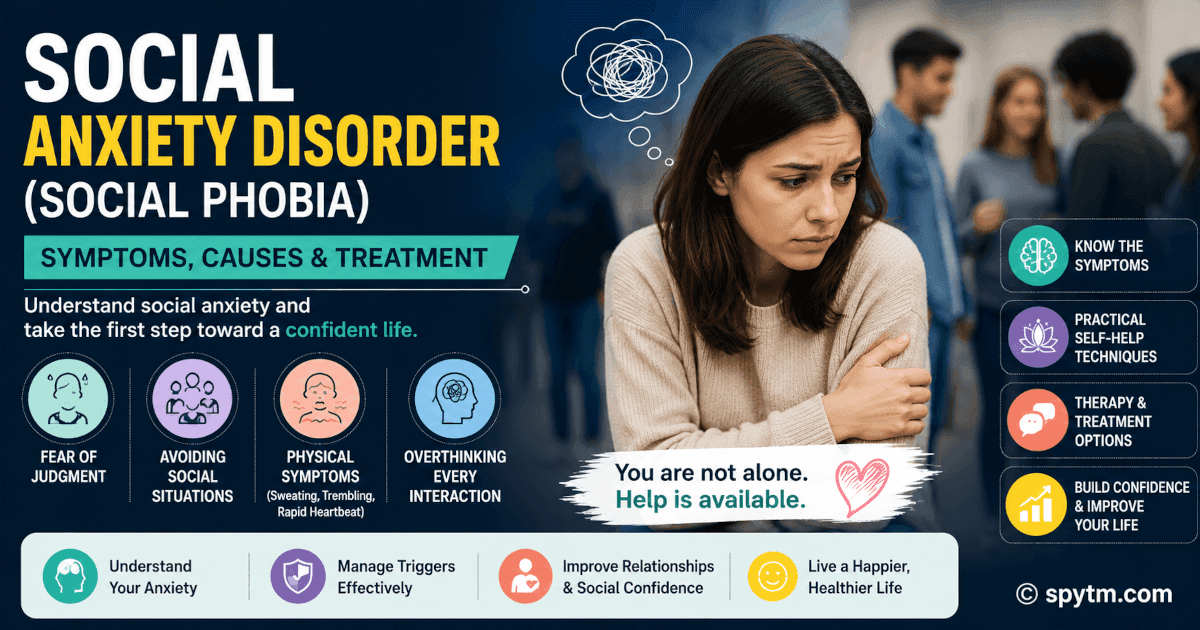
Have you ever felt nervous before giving a presentation or meeting someone new? Most people do. Feeling shy or uncomfortable in certain social situations is normal.
However, when the fear becomes so intense that it affects daily life, relationships, education, or career growth, it may be more than simple shyness. It could be Social Anxiety Disorder (SAD), also known as Social Phobia.
People with social anxiety often worry excessively about being judged, criticized, embarrassed, or rejected. These fears can become overwhelming and may cause them to avoid social situations altogether.
The good news is that social anxiety disorder is treatable. With the right support, coping strategies, and professional treatment when necessary, many people learn to manage their symptoms and live fulfilling lives.
In this guide, you'll learn everything about social anxiety disorder, including symptoms, causes, treatment options, practical self-help techniques, and ways to support someone experiencing it.
What Is Social Anxiety Disorder?
Social Anxiety Disorder is a mental health condition characterized by an intense fear of social situations where a person may be observed, evaluated, or judged by others.
Unlike occasional nervousness, social anxiety can create significant distress and interfere with everyday activities.
People with this condition often worry about:
Saying the wrong thing
Looking foolish
Being criticized
Appearing anxious
Making mistakes in public
Meeting new people
Speaking in groups
The fear may occur before, during, or after social interactions.
Shyness vs Social Anxiety Disorder
Many people confuse shyness with social anxiety. Although they share similarities, they are not the same.
Factor | Shyness | Social Anxiety Disorder |
|---|---|---|
Severity | Mild | Moderate to severe |
Daily Impact | Usually minimal | Significant |
Fear of Judgment | Sometimes | Intense |
Avoidance Behavior | Occasional | Frequent |
Emotional Distress | Mild | High |
Need for Treatment | Usually no | Sometimes yes |
A shy person may feel uncomfortable initially but still participate in activities. A person with social anxiety may avoid those situations entirely.
Common Symptoms of Social Anxiety Disorder
Symptoms vary from person to person.
Emotional Symptoms
People may experience:
Intense fear in social situations
Extreme self-consciousness
Fear of embarrassment
Fear of criticism
Fear of rejection
Worrying for days before events
Low self-confidence
Behavioral Symptoms
Many individuals:
Avoid social gatherings
Avoid eye contact
Stay silent during conversations
Skip meetings or presentations
Avoid asking questions
Avoid public speaking
Physical Symptoms
The body often reacts strongly to anxiety.
Common physical symptoms include:
Rapid heartbeat
Sweating
Trembling
Dry mouth
Upset stomach
Nausea
Muscle tension
Dizziness
Blushing
Shortness of breath
Some people may even experience panic attacks in severe situations.
Real-World Examples of Social Anxiety
Example 1: The Student
A college student knows the answer in class but avoids raising their hand because they fear making a mistake and being laughed at.
Example 2: The Employee
An employee avoids speaking during meetings despite having good ideas because they worry others will judge them.
Example 3: The Job Applicant
A talented candidate repeatedly postpones interviews due to fear of interacting with strangers.
Example 4: The Social Event
Someone receives an invitation to a wedding but declines because they feel uncomfortable talking to unfamiliar people.
What Causes Social Anxiety Disorder?
There is no single cause.
Several factors may contribute.
Genetics
Research suggests social anxiety can run in families.
Having a close relative with anxiety may increase risk.
Brain Structure
Certain areas of the brain involved in fear processing may be more active in people with anxiety disorders.
Negative Experiences
Past experiences such as:
Bullying
Humiliation
Rejection
Public embarrassment
Harsh criticism
can contribute to social anxiety.
Personality Factors
People who are naturally more sensitive, cautious, or introverted may be more vulnerable.
Environmental Factors
Growing up in highly critical or overprotective environments may also play a role.
How Social Anxiety Affects Daily Life
Without proper management, social anxiety can affect many areas of life.
Education
Students may:
Avoid participation
Miss presentations
Underperform academically
Career
Employees may:
Avoid leadership roles
Miss promotion opportunities
Struggle during interviews
Relationships
People may find it difficult to:
Make friends
Build romantic relationships
Maintain social connections
Mental Health
Untreated social anxiety can increase the risk of:
Depression
Isolation
Low self-esteem
Substance misuse
How to Manage Social Anxiety Disorder
Managing social anxiety takes time and patience.
Small consistent steps often produce the best results.
Learn More About Anxiety
Knowledge reduces fear.
Understanding social anxiety helps people recognize triggers, warning signs, and treatment options.
Why It Helps
When you understand what is happening in your mind and body, symptoms become less frightening.
Practical Tips
Read reliable mental health resources
Learn common anxiety patterns
Identify personal triggers
Understand treatment options
Maintain a Journal
Keeping a journal helps identify recurring thoughts and situations that trigger anxiety.
What to Record
Situation
Thoughts
Feelings
Physical symptoms
Outcome
Example
Situation: Team meeting
Thought: "Everyone will think I'm stupid."
Reality: Nobody criticized me.
Over time, journaling helps challenge negative thinking patterns.
Practice Relaxation Techniques
Relaxation techniques can reduce the body's stress response.
Deep Breathing
Follow these steps:
Sit comfortably.
Inhale slowly through your nose.
Hold for a few seconds.
Exhale slowly through your mouth.
Repeat several times.
Benefits
Reduces tension
Slows heart rate
Improves focus
The 5-4-3-2-1 Grounding Technique
This technique helps bring attention back to the present moment.
Identify:
5 Things You Can See
Look around and notice five visible objects.
4 Things You Can Touch
Focus on physical sensations.
3 Things You Can Hear
Listen carefully to surrounding sounds.
2 Things You Can Smell
Identify scents around you.
1 Thing You Can Taste
Notice any taste in your mouth.
This method helps interrupt anxious thought cycles.
Take Things Slow and Steady
Many people try to eliminate anxiety immediately.
This often creates more frustration.
Better Approach
Break larger challenges into smaller steps.
For example:
Step 1: Make eye contact.
Step 2: Say hello.
Step 3: Start short conversations.
Step 4: Join small groups.
Step 5: Attend larger gatherings.
Gradual progress builds confidence over time.
Communication Is Key
Many people struggle silently.
Talking with trusted people can reduce feelings of isolation.
Who Can Help?
Friends
Family members
Mentors
Teachers
Counselors
Sharing concerns often provides emotional support and practical advice.
Professional Treatment Options
Professional treatment can be highly effective.
Cognitive Behavioral Therapy (CBT)
CBT is considered one of the most effective treatments for social anxiety.
It helps people:
Identify negative thoughts
Challenge irrational beliefs
Develop healthier thinking patterns
Benefits
Strong scientific support
Long-term improvement
Practical coping skills
Exposure Therapy
This approach gradually introduces feared situations in a safe and structured way.
Examples:
Starting conversations
Ordering food
Speaking in meetings
Repeated exposure helps reduce fear over time.
Medication
Healthcare professionals may prescribe medication in certain cases.
Examples include:
Selective serotonin reuptake inhibitors (SSRIs)
Other anxiety medications
Medication decisions should always be discussed with a qualified healthcare provider.
Comparing Treatment Methods
Method | Benefits | Limitations |
|---|---|---|
Self-Help Strategies | Accessible | May not be enough alone |
Journaling | Improves awareness | Requires consistency |
Relaxation Techniques | Fast symptom relief | Temporary effect |
CBT | Long-term improvement | Requires commitment |
Exposure Therapy | Reduces avoidance | Can feel challenging initially |
Medication | Helpful for some individuals | Possible side effects |
Common Mistakes When Managing Social Anxiety
Avoiding Every Social Situation
Avoidance often strengthens anxiety over time.
Expecting Instant Results
Recovery usually happens gradually.
Comparing Yourself to Others
Everyone progresses at a different pace.
Ignoring Physical Health
Poor sleep, lack of exercise, and unhealthy habits can worsen anxiety.
Not Seeking Help When Needed
Professional support can make a significant difference.
Lifestyle Tips That May Help
Exercise Regularly
Physical activity may reduce stress and improve mood.
Get Enough Sleep
Aim for consistent and adequate sleep.
Reduce Excessive Caffeine
Too much caffeine may worsen anxiety symptoms.
Practice Mindfulness
Mindfulness helps improve awareness of thoughts and emotions.
Build Healthy Social Habits
Start with small interactions and gradually expand your comfort zone.
Pros and Cons of Self-Help Approaches
Pros | Cons |
|---|---|
Affordable | Requires consistency |
Accessible | Progress may be slower |
Builds confidence | May not address severe symptoms |
Encourages self-awareness | Some people need professional support |
Improves coping skills | Not a quick fix |
Frequently Asked Questions
Is social anxiety disorder a mental illness?
Yes. Social anxiety disorder is a recognized mental health condition that can affect daily functioning.
Can social anxiety go away on its own?
Some people improve over time, but many benefit from treatment and coping strategies.
What is the difference between shyness and social anxiety?
Shyness is generally mild, while social anxiety causes significant distress and can interfere with daily life.
Can children develop social anxiety disorder?
Yes. Symptoms often begin during childhood or adolescence.
Is social anxiety treatable?
Yes. Many people improve significantly through therapy, self-help strategies, medication, or a combination of treatments.
Can exercise help social anxiety?
Regular physical activity may reduce stress and improve overall mental well-being.
When should I seek professional help?
Consider seeking professional support if anxiety is affecting school, work, relationships, or daily activities.
Can social anxiety cause physical symptoms?
Yes. Symptoms such as sweating, trembling, nausea, rapid heartbeat, and dizziness are common.
Final Thoughts
Social Anxiety Disorder is more than simple shyness. It is a real mental health condition that can affect relationships, education, careers, and overall quality of life. The fear of judgment, embarrassment, or rejection can feel overwhelming, but it does not have to control your future.
By learning about social anxiety, practicing coping techniques, maintaining healthy habits, and seeking professional help when necessary, many people successfully manage their symptoms and build confidence over time.
Remember, progress does not happen overnight. Small steps taken consistently can lead to meaningful improvements. If social anxiety is making everyday life difficult, reaching out for support may be the first step toward recovery and a more confident life.