Most people worry about their health occasionally. It is normal to feel concerned when you experience an unusual symptom, develop a persistent cough, or wait for the results of a medical test.
However, some people spend a large part of their day worrying about serious illnesses even when doctors, medical examinations, and diagnostic tests show that they are healthy. These fears can become so intense that they affect work, relationships, sleep, and overall quality of life.
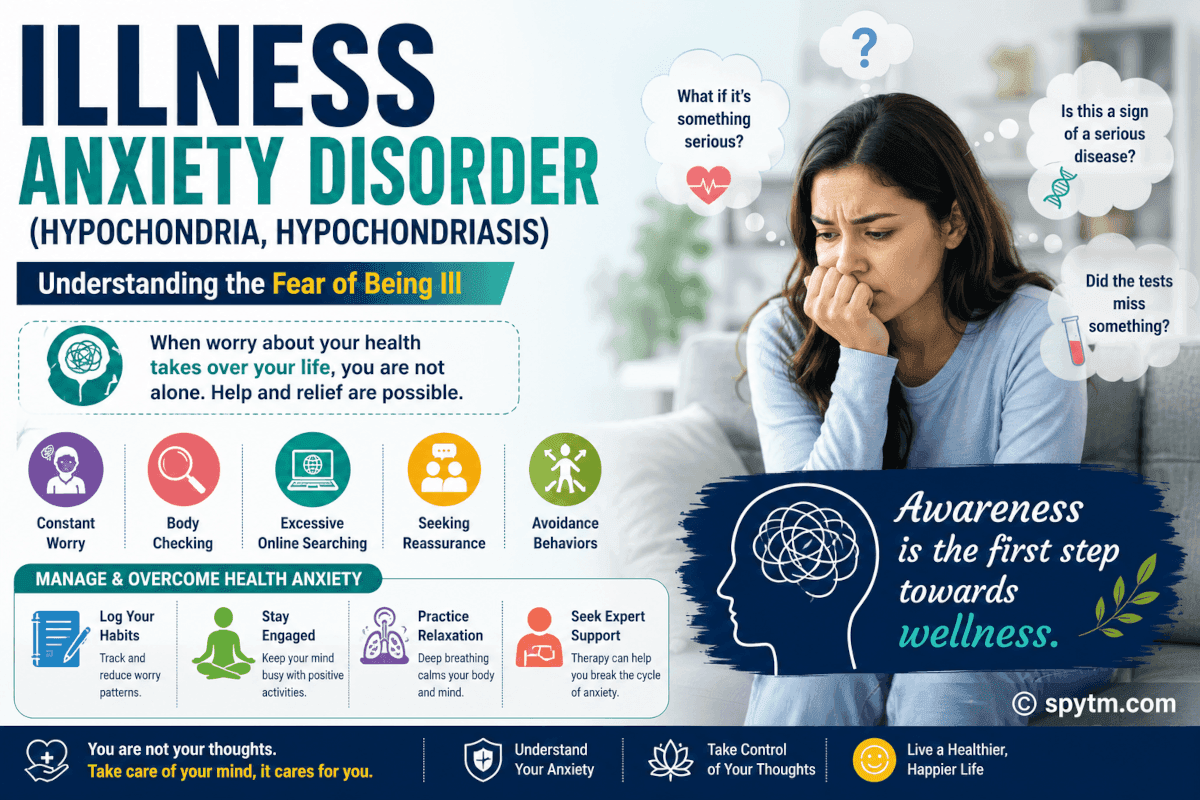
This condition is known as Illness Anxiety Disorder (IAD), previously called Hypochondria or Hypochondriasis.
People with illness anxiety disorder often misinterpret normal body sensations as signs of severe diseases. A mild headache may feel like a brain tumor. A harmless skin spot may seem like skin cancer. A temporary stomach ache may trigger fears of a life-threatening condition.
The good news is that illness anxiety disorder is treatable. With the right understanding, coping strategies, and professional support, many people learn to manage their health anxiety and regain control of their lives.
What Is Illness Anxiety Disorder?
Illness Anxiety Disorder is a mental health condition in which a person becomes excessively worried about having or developing a serious illness despite little or no medical evidence.
The anxiety often persists even after:
Medical examinations
Blood tests
Scans
Doctor reassurance
The person may understand that their fears seem excessive, but they find it extremely difficult to stop worrying.
Why It Happens
The brain becomes highly focused on bodily sensations.
Normal sensations such as:
Muscle twitches
Mild headaches
Temporary dizziness
Stomach discomfort
Fatigue
may be interpreted as signs of dangerous diseases.
Illness Anxiety Disorder vs Normal Health Concerns
Everyone worries about their health occasionally.
The difference lies in intensity and duration.
Factor | Normal Health Concern | Illness Anxiety Disorder |
|---|---|---|
Concern Level | Temporary | Persistent |
Response to Medical Reassurance | Usually reassured | Often remains worried |
Impact on Daily Life | Minimal | Significant |
Health Research | Occasional | Excessive |
Doctor Visits | When needed | Frequent or avoided |
Emotional Distress | Mild | High |
Types of Illness Anxiety Disorder
Healthcare professionals often observe two common patterns.
Care-Seeking Type
People with this type frequently seek medical attention.
They may:
Visit multiple doctors
Request repeated testing
Seek constant reassurance
Change healthcare providers often
Real-World Example
A person experiences occasional chest discomfort and visits several cardiologists despite repeated normal test results.
Care-Avoiding Type
People with this form avoid healthcare settings.
They may fear:
Receiving bad news
Being diagnosed with a serious disease
Medical procedures
Hospitals
Real-World Example
A person worries constantly about cancer but avoids routine health screenings because they fear hearing the results.
Symptoms of Illness Anxiety Disorder
Symptoms can vary from person to person.
Emotional Symptoms
People often experience:
Constant worry about health
Fear of serious diseases
Difficulty controlling health-related thoughts
Anxiety when hearing about illnesses
Behavioral Symptoms
Frequent Body Checking
Repeatedly checking:
Lumps
Skin changes
Heart rate
Breathing patterns
Excessive Reassurance Seeking
Frequently asking:
Family members
Friends
Doctors
for reassurance.
Constant Online Research
Searching symptoms online repeatedly.
This behavior is often called Cyberchondria.
Avoidance Behaviors
Some individuals avoid:
Hospitals
Medical shows
News about diseases
Sick people
Physical Symptoms
The anxiety itself may cause physical symptoms such as:
Increased heart rate
Sweating
Muscle tension
Dizziness
Fatigue
Headaches
Upset stomach
These symptoms can then reinforce the person's health fears.
Common Fears Experienced by People with Illness Anxiety Disorder
People may fear developing:
Cancer
Heart disease
Stroke
Brain tumors
Multiple sclerosis
Rare genetic disorders
Infectious diseases
The feared illness may change over time.
What Causes Illness Anxiety Disorder?
There is no single cause.
Experts believe multiple factors contribute.
Childhood Experiences
Past experiences can influence future health anxiety.
Examples include:
Serious childhood illness
Hospitalization
Family members with chronic illness
Medical trauma
Personality Traits
People who are naturally cautious or highly sensitive may be more vulnerable.
Family History
Health anxiety sometimes appears more frequently within families.
Previous Mental Health Conditions
People with:
Generalized anxiety disorder
Depression
Panic disorder
Obsessive-compulsive disorder
may have a higher risk.
Stressful Life Events
Major life changes can trigger health anxiety.
Examples include:
Job loss
Divorce
Death of a loved one
Financial stress
The Internet and Health Anxiety
The internet provides access to valuable health information.
However, excessive symptom searching can worsen anxiety.
Example
Someone searches:
"Headache causes"
The results may include:
Dehydration
Stress
Brain tumor
The person may focus only on the most serious possibility.
This often creates a cycle:
Symptom → Search → Anxiety → More Searching → More Anxiety
How Illness Anxiety Affects Daily Life
Without proper management, health anxiety can affect many areas of life.
Relationships
Family members may become exhausted by repeated requests for reassurance.
Work and Education
People may struggle to focus due to constant worry.
Finances
Frequent medical consultations and unnecessary testing can become expensive.
Mental Health
Persistent anxiety may contribute to:
Depression
Sleep problems
Social withdrawal
Stress-related symptoms
How to Manage Illness Anxiety Disorder
Recovery usually involves gradual changes in thinking and behavior.
1. Log Your Habits
Keeping track of behaviors helps increase awareness.
What to Record
Symptom checking
Doctor visits
Online searches
Requests for reassurance
Example
You may discover you check your pulse 20 times daily without realizing it.
Goal
Reduce these behaviors gradually over time.
2. Keep Yourself Engaged
Health anxiety often grows when the mind is idle.
Helpful Activities
Walking
Reading
Exercising
Learning new skills
Hobbies
Social activities
Why It Works
Shifting attention away from health worries reduces anxiety.
3. Practice Relaxation Techniques
Relaxation exercises help calm the body's stress response.
Deep Breathing
Try the following:
Sit comfortably.
Inhale slowly through your nose.
Hold briefly.
Exhale slowly through your mouth.
Repeat for several minutes.
Benefits
Reduces tension
Slows heart rate
Improves focus
Mindfulness Exercises
Mindfulness teaches people to observe thoughts without reacting to them.
Instead of believing every health-related thought, you learn to view it as simply a thought.
4. Limit Online Symptom Searching
Constant internet research often increases anxiety rather than reducing it.
Practical Tip
Set boundaries.
For example:
No symptom searches after a certain time
Use only trusted medical sources
Avoid excessive searching
5. Seek Professional Help
Professional treatment can significantly improve symptoms.
Many people delay seeking help because they believe their concern is purely physical.
However, addressing the anxiety itself often brings substantial relief.
Treatment Options for Illness Anxiety Disorder
Cognitive Behavioral Therapy (CBT)
CBT is considered one of the most effective treatments.
It helps individuals:
Identify unhealthy thought patterns
Challenge catastrophic thinking
Develop healthier coping skills
Example
Instead of thinking:
"I have a headache. It must be a brain tumor."
CBT helps develop more balanced thinking:
"I have a headache. There are many harmless explanations."
Stress Management
Managing overall stress often reduces health anxiety.
Techniques include:
Exercise
Meditation
Relaxation exercises
Time management
Medication
Some individuals may benefit from medication.
Healthcare professionals may consider medication when:
Anxiety is severe
Depression is also present
Therapy alone is insufficient
Medication decisions should always be made with qualified healthcare providers.
Comparison of Treatment Approaches
Treatment | Benefits | Limitations |
|---|---|---|
Self-Help Strategies | Accessible | Requires consistency |
Journaling | Improves awareness | Progress may be gradual |
Mindfulness | Reduces anxiety | Requires practice |
CBT | Strong evidence | Needs commitment |
Stress Management | Improves overall wellbeing | Not a standalone cure |
Medication | Helpful for some cases | Possible side effects |
Common Mistakes People Make
Constantly Seeking Reassurance
Temporary relief often strengthens the anxiety cycle.
Excessive Internet Searches
More searching usually creates more worry.
Ignoring Mental Health
Focusing only on physical explanations may delay effective treatment.
Expecting Immediate Improvement
Managing health anxiety takes time and patience.
Avoiding Professional Help
Early treatment often leads to better outcomes.
Pros and Cons of Self-Management Strategies
Pros | Cons |
|---|---|
Low cost | Requires discipline |
Easy to start | Progress may be slow |
Improves awareness | Severe cases may need therapy |
Reduces stress | Not a quick fix |
Builds healthy habits | Requires consistency |
Frequently Asked Questions
Is hypochondria a real medical condition?
Yes. Illness Anxiety Disorder is a recognized mental health condition.
Can illness anxiety disorder be cured?
Many people experience significant improvement through therapy and coping strategies.
Is illness anxiety the same as pretending to be sick?
No. The fear and anxiety are genuine and can be extremely distressing.
Why do I keep thinking I have serious illnesses?
Health anxiety often causes normal sensations to be interpreted as signs of disease.
Can internet searches worsen health anxiety?
Yes. Excessive symptom searching is a common trigger.
Is medication always required?
No. Many people improve through therapy and self-help techniques alone.
Can children develop illness anxiety?
Yes. Although it is more common in adults, children can also experience health anxiety.
When should I seek professional help?
If health worries are interfering with daily life, work, relationships, or emotional wellbeing, professional support is recommended.
Final Thoughts
Illness Anxiety Disorder can feel overwhelming, but it is important to remember that you are not alone. Many people experience persistent fears about their health, even when medical evaluations show no serious illness.
The condition is not a sign of weakness or attention-seeking. It is a genuine mental health challenge that deserves understanding and appropriate care.
By learning about health anxiety, reducing reassurance-seeking behaviors, limiting excessive symptom research, practicing relaxation techniques, and seeking professional support when needed, many individuals successfully regain control over their thoughts and improve their quality of life.
Recovery is often gradual, but every small step toward managing anxiety can make a meaningful difference.